You just washed your car. It looks clean — but run your hand across the hood and it feels like sandpaper. That roughness isn't dirt. It's bonded contamination, and no amount of soap is going to take it off.
That's what a clay bar is for. And if you've ever wondered whether it's a real step or just detailing theater, here's the straight answer: it's real, it's essential before polishing, and skipping it is one of the most common ways a paint job gets ruined.
The Baggie Test: Feel It Yourself
Want proof your paint needs clay? Try this. Put your hand inside a thin plastic sandwich bag and lightly glide your fingertips over your freshly washed hood or roof.
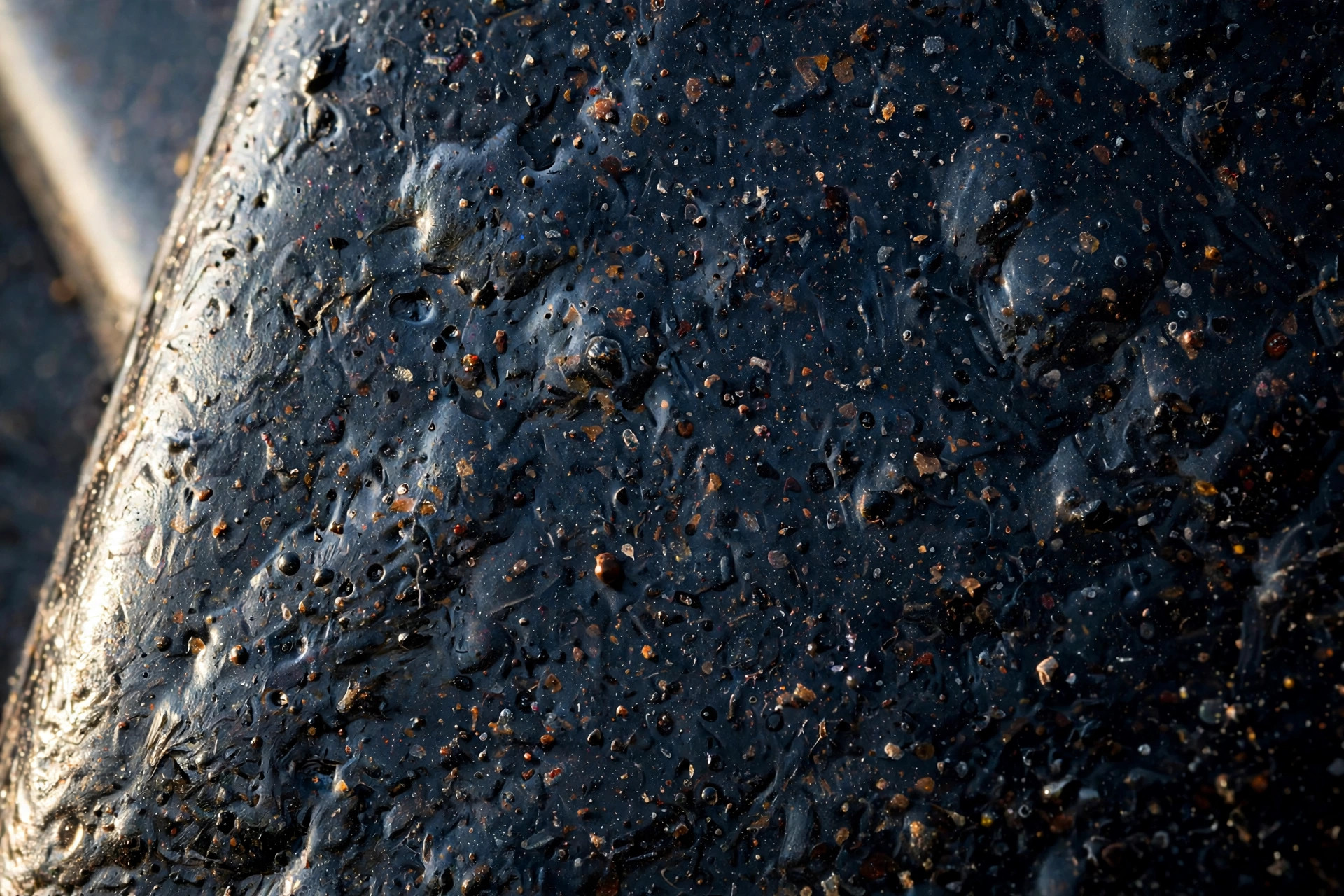
Feel that grit? Those tiny bumps are contaminants physically stuck in the clear coat — not sitting on it. A wash mitt glides right over them. Your fingernail in a baggie doesn't lie.
What a Clay Bar Actually Does
A clay bar is an engineered resin compound. As you glide it across lubricated paint, it grabs anything protruding from the clear coat and shears it off at the surface — pulling the particle out and trapping it in the clay itself.
Here's what it removes that washing can't:
- Overspray — from road work, nearby painting, or industrial sources
- Tree sap specks — the tiny hardened dots, not the big globs
- Tar spots — especially along lower panels and behind wheels
- Industrial fallout — airborne metal and chemical particles that settle into paint
- Rail dust — fine iron particles (the big stuff gets dissolved first — see below)
After a proper clay treatment, the paint feels like glass. That slickness isn't a coating — it's just what clean clear coat actually feels like.
Where Clay Sits in the Sequence (Order Matters)
Clay is step three of decontamination, and the order isn't optional:
- Decontamination wash — strip the loose dirt and old wax
- Iron decontamination — chemically dissolve embedded iron particles (the purple bleeding reaction). We covered exactly how this works in What Iron Decontamination Actually Does.
- Clay bar — mechanically shear off everything the chemicals left behind
- Polish — correct the swirls and haze
- Ceramic coating — lock it all in
Why iron remover first? Because dragging a clay bar across iron particles you could have dissolved chemically is just asking for marring. Chemistry first, mechanics second. That's the rule.
And why clay before polishing? Because polishing over bonded contaminants grinds them into the paint — the polisher pad picks up grit and turns it into sandpaper. Clay first means the polisher is working on truly clean paint, which is how you get a defect-free finish instead of new scratches.
Clay Bar vs. Clay Mitt: Does It Matter?
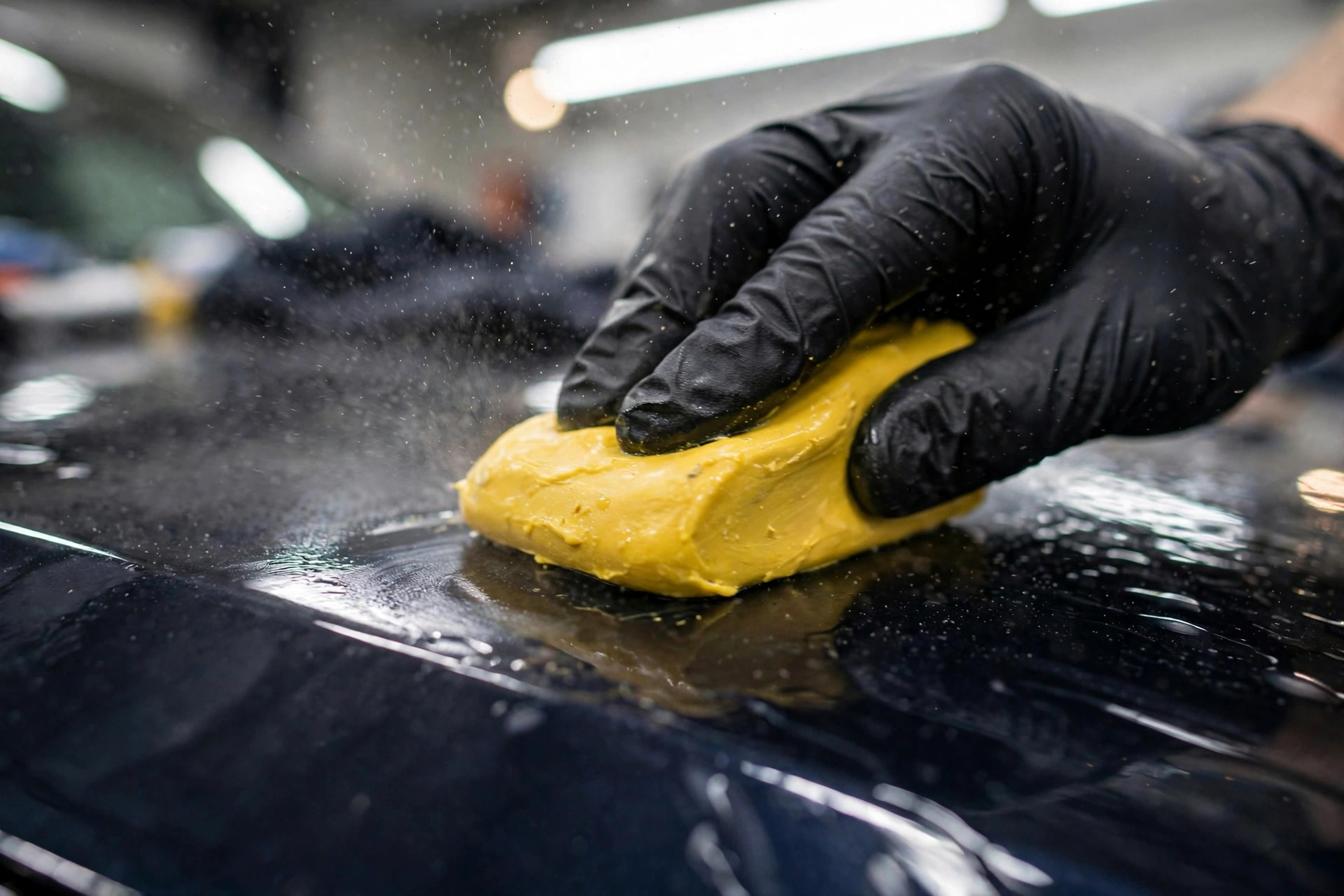
You'll see both sold. A traditional clay bar is a malleable block you knead and flatten; a clay mitt is a mitt with a rubberized polymer face. They do the same job — the mitt covers ground faster and you can rinse it if you drop it (a dropped clay bar goes straight in the trash, because one grain of grit embedded in it will scratch everything it touches).
For a professional doing full corrections, the bar gives more feel and control on contours. For maintenance decon, the mitt is faster. Either one works if the technique is right.
Lubrication Is Non-Negotiable
Here's where DIY clay jobs go wrong: never clay dry paint. Without lubricant, the clay grabs and drags instead of gliding — and that dragging marrs the clear coat with fine scratches.
Use a dedicated clay lubricant or a slick detail spray, keep the panel wet, use light pressure, and work small sections. Fold and re-knead the clay frequently to expose a clean surface. If the clay ever feels grabby, stop and add more lube.
What Clay Does NOT Do
Let's kill a myth: a clay bar does not remove scratches or swirl marks. It removes things stuck on the paint, not defects in the paint. If your black car shows swirls in the sun, clay won't fix that — only machine polishing will.
But here's the thing: polishing can't do its job properly on contaminated paint either. Clay doesn't fix scratches — it preps the paint for the step that does. Skip the clay, and you're polishing over grit. Do the clay, and the polisher cuts clean.
That's the whole story. Clay bar: not magic, not theater — just the unskippable middle step between chemical decon and machine polishing. Every proper correction and every coating we install gets it, because coatings lock in whatever's underneath, and we're not locking in contamination.
Message us today if your paint feels rough after a wash — we'll tell you honestly whether it needs a decon, a correction, or both. Call or text 724-689-5482. We're in Brookville, PA, and every vehicle gets the full decon sequence before we ever touch a polisher.