Winter is the hardest season your car will face all year. Road salt, liquid brine, freeze-thaw cycles, and months of abrasive grime — it's a slow-motion attack on your paint, your underbody, and every piece of exposed trim. The damage doesn't show up in December. It shows up in April, when the salt comes off and the corrosion stays.
Before Winter: Prep Is Everything
The single highest-leverage thing you can do is go into winter with clean, decontaminated, protected paint:
- Decontamination wash — strip the summer's bonded grime, tar, and fallout so protection bonds to actual paint
- Protection — a ceramic coating is the gold standard (years of chemical resistance), but even a quality sealant gives the salt something to sit on besides your clear coat
- Underbody — a clean underbody going into winter corrodes slower than one already holding grime
For the full breakdown of what salt and brine actually do to paint, read our Winter Protection Guide — it covers the chemistry and why a coating is the best defense.
During Winter: The Routine That Works
Protection buys you margin, not immunity. Through the winter:
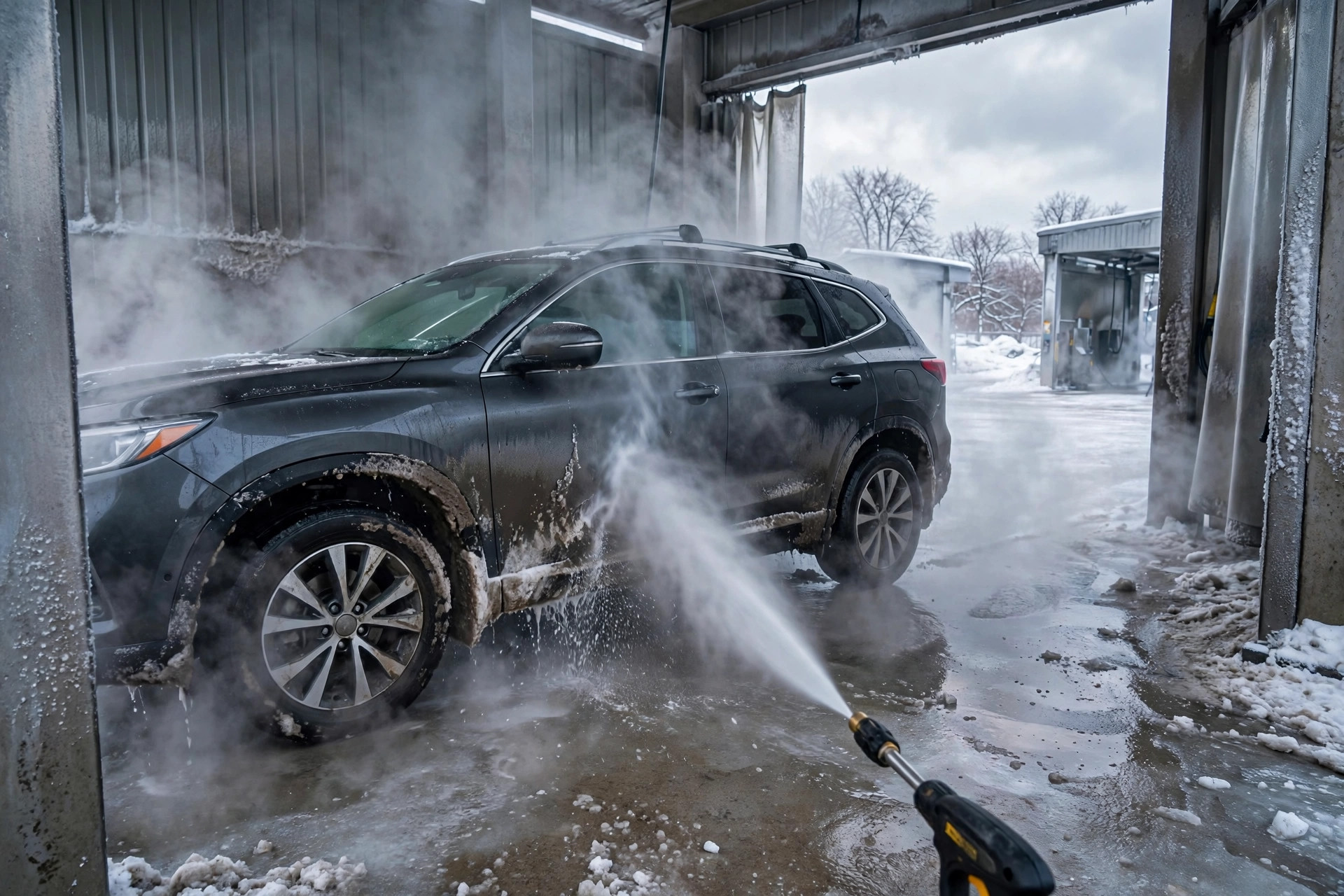
- Wash regularly — don't let salt sit for weeks. Every wash resets the clock
- Hit the underbody and lower panels — that's where salt collects and where rust starts. A pressure rinse underneath matters more than a perfect hood
- Touchless or careful hand wash — grit-covered winter paint scratches easily; never wipe it dry or take it through a brush wash
- Keep drains and jambs clear — door jambs, trunk seals, and drain holes trap salty slush
You don't need to be obsessive — you need to be consistent. A rinse every week or two through salt season beats one heroic detail in spring.
What Winter Does to Unprotected Paint
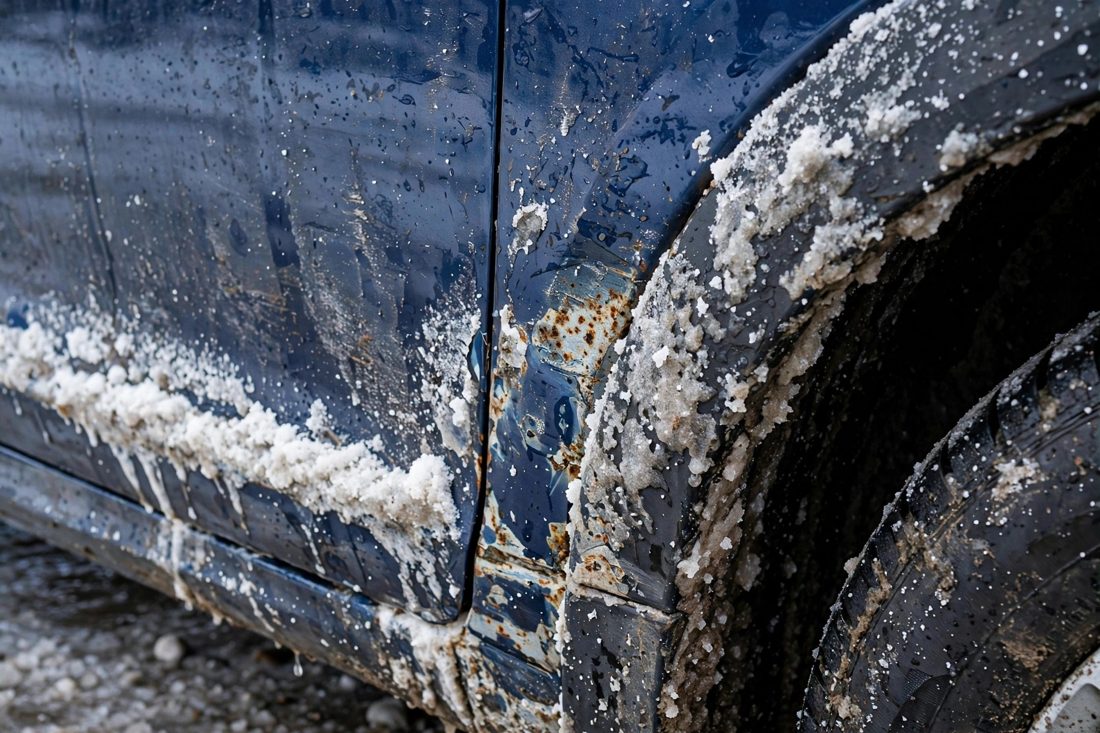
Salt and brine are corrosive to metal and harsh on clear coat. They dull the finish, attack chips and stone marks first, and accelerate rust wherever the paint is compromised. A coated car sheds the salty film with a rinse; an unprotected car holds it against the paint until you wash it off — if you wash it off.
The Spring Bill
Here's what skipping winter care actually costs. Salt finds every stone chip and scratch and starts corrosion there first. By spring, those tiny chips have become rust spots — and rust repair means sanding, priming, painting, and blending, easily hundreds per spot at a body shop. Underbody corrosion is worse: brake lines, fuel lines, and subframe components don't get second chances.
Compare that to a pre-winter protection package and a few rinses through the season. It's not even close. Winter car care isn't pampering — it's the cheapest rust prevention you can buy.
Quick tip: the best time to book pre-winter protection is October — before the first salt, while shops still have openings. Once the snow flies, everyone's calling at once.
The Bottom Line
Go in protected, wash through the season, and focus on the underbody. Do that, and come spring your car will look like winter never happened — while everyone else is pricing rust repair. Winter damage is almost entirely preventable — it's just a question of whether you deal with the salt in January or the rust in April.
Message us today to get your car protected before the first salt truck rolls.
Vinnie's Auto Detailing and Ceramic Coating — Brookville, PA. ⭐100% Five Star Reviews⭐ | ☎️ 724-689-5482