Anyone can wash a car. That doesn't mean anyone should be machine-polishing yours.
The gap between a driveway wash and a professional detail isn't effort — it's knowledge, equipment, and judgment. Here's what you're actually paying for, and how often you need it.
What a Pro Brings That a Bucket Can't
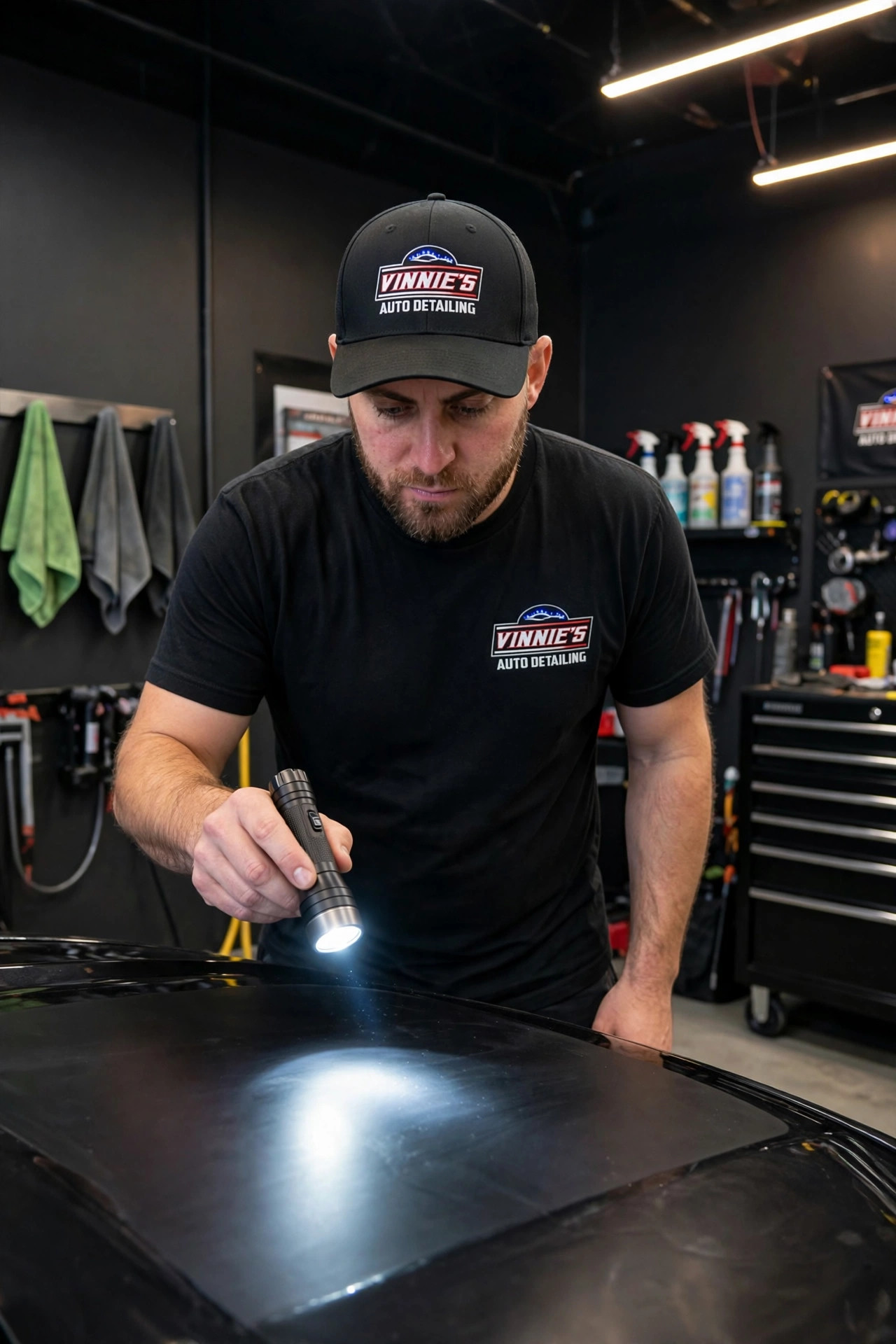
- Paint evaluation — a pro reads your paint before touching it: what the defects are, how deep they go, and what it'll take to fix them — honestly, even if the answer is "you don't need that service"
- Proper lighting — defects are invisible in a driveway and obvious under inspection lighting. You can't fix what you can't see
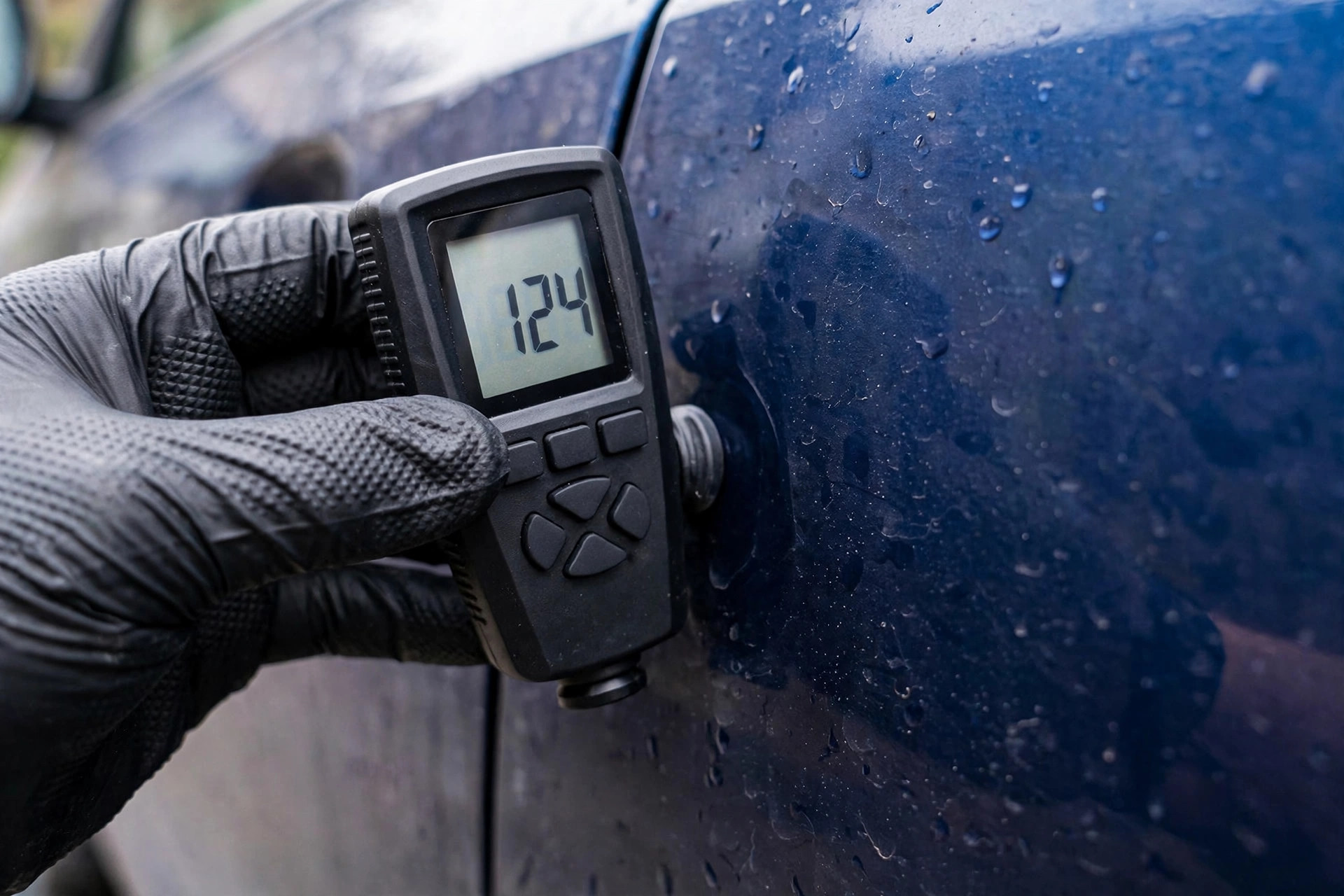
- Paint measurement — a paint-depth gauge tells a pro exactly how much clear coat they're working with, so correction stays safe
- Real chemistry — the right chemical for iron, tar, sap, and mineral deposits instead of one harsh soap for everything
- Technique — machine polishing, clay work, and coating application are skills built over years. The feel for it can't be faked
The Cost of a Cheap Detail
A bargain detail can cost more than a proper one. We've fixed the aftermath plenty of times: rotary buffer burns, holograms, trim stained white by slung compound, "dressings" that sling silicone all over the paint, and coatings applied over unprepped surfaces that fail in months.
Bad work doesn't just look bad — correcting someone else's damage often costs more than doing it right the first time would have.
How Often Should You Book?
It depends on how the car lives, but here are honest baselines:
- Full detail: every 6–12 months. Daily drivers on PA roads: closer to 6. Garage-kept weekend cars: 12 is fine
- Maintenance washes: regularly. A proper maintenance routine between details is what keeps the paint from degrading
- Ceramic coating: every few years. A professional coating lasts years, not months — with a yearly checkup to keep it performing
- Paint correction: as needed. Not on a schedule — when the defects warrant it, and never more aggressively than the paint requires
Anyone selling you a correction every six months is either not measuring or not being honest. Correction spends clear coat; a pro does it only when the paint actually needs it.
What to Ask Before You Book
Not every shop calling itself "professional" is. Before you hand over your keys, ask a few questions:
- Do you measure paint depth before correction? If they don't know what a paint gauge is, they shouldn't be machine-polishing your car.
- What lighting do you inspect under? "The sun" isn't an answer — pros use dedicated inspection lighting.
- What's your wash process? Two-bucket method, grit guards, clean microfiber — the basics done right prevent 90% of swirls.
- Will you tell me if I don't need a service? The right shop talks you out of work sometimes. That's the one you want.
A real professional welcomes these questions. Anyone who gets defensive wasn't the right choice anyway.
Quick tip: ask to see a shop's work under their inspection lights before you book, not just in daylight photos. What the paint looks like under proper lighting is what you're actually paying for.
The Bottom Line
A professional detailer is part technician, part diagnostician: the right tools, the right chemistry, and the judgment to know what your paint needs — and what it doesn't. Book a full detail once or twice a year, maintain it between visits, and protect it with a coating, and your car will look better at year five than most cars look at year two.
Message us today to talk through the right maintenance plan for your vehicle and how you use it.
Vinnie's Auto Detailing and Ceramic Coating — Brookville, PA. ⭐100% Five Star Reviews⭐ | ☎️ 724-689-5482