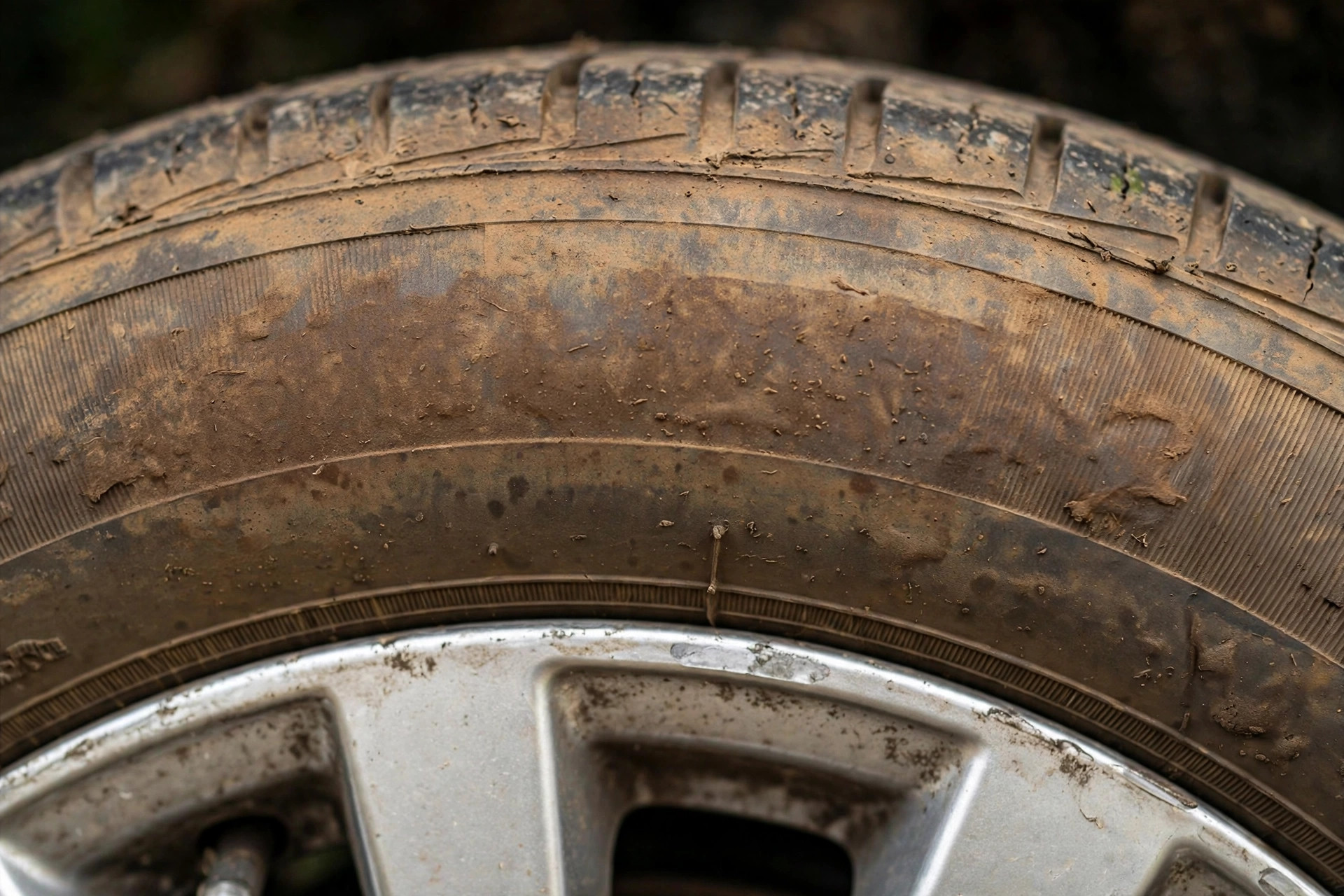
You wash the car, dress the tires, they look great — and two weeks later the sidewalls are brown again. You didn’t do anything wrong. That’s chemistry, and it’s called blooming.
What Blooming Actually Is
Tire manufacturers build antiozonants and antioxidants — waxy compounds — into the rubber. These waxes slowly migrate to the surface, where they protect the tire from ozone and UV damage that would otherwise crack the sidewall. It’s a self-defense mechanism, and it’s working as designed.
The catch: when those waxes hit air, they oxidize — and oxidized wax is brown. So the brown film on your sidewalls isn’t dirt. It’s the tire protecting itself, and the protection turns brown doing it.
Why Harsh Cleaners Make It Worse
Here’s the trap: strong degreasers and all-purpose cleaners strip those protective waxes right off. The tire senses the loss and blooms harder to replace them — so a week later it’s browner than before you cleaned it. Aggressive cleaning creates a cycle: strip, bloom, strip, bloom.
Silicone-based dressings make it worse in a different way — they trap the brown oxidation under a shiny layer instead of removing it. Looks good for a day, then the brown pushes right through.
The Right Fix
Clean the tire properly: a dedicated tire cleaner (not wheel acid, not heavy degreaser), a stiff bristle brush, and real agitation. You’ll see the brown foam rinse away — that’s the oxidation coming off. It may take two passes on a badly bloomed tire.
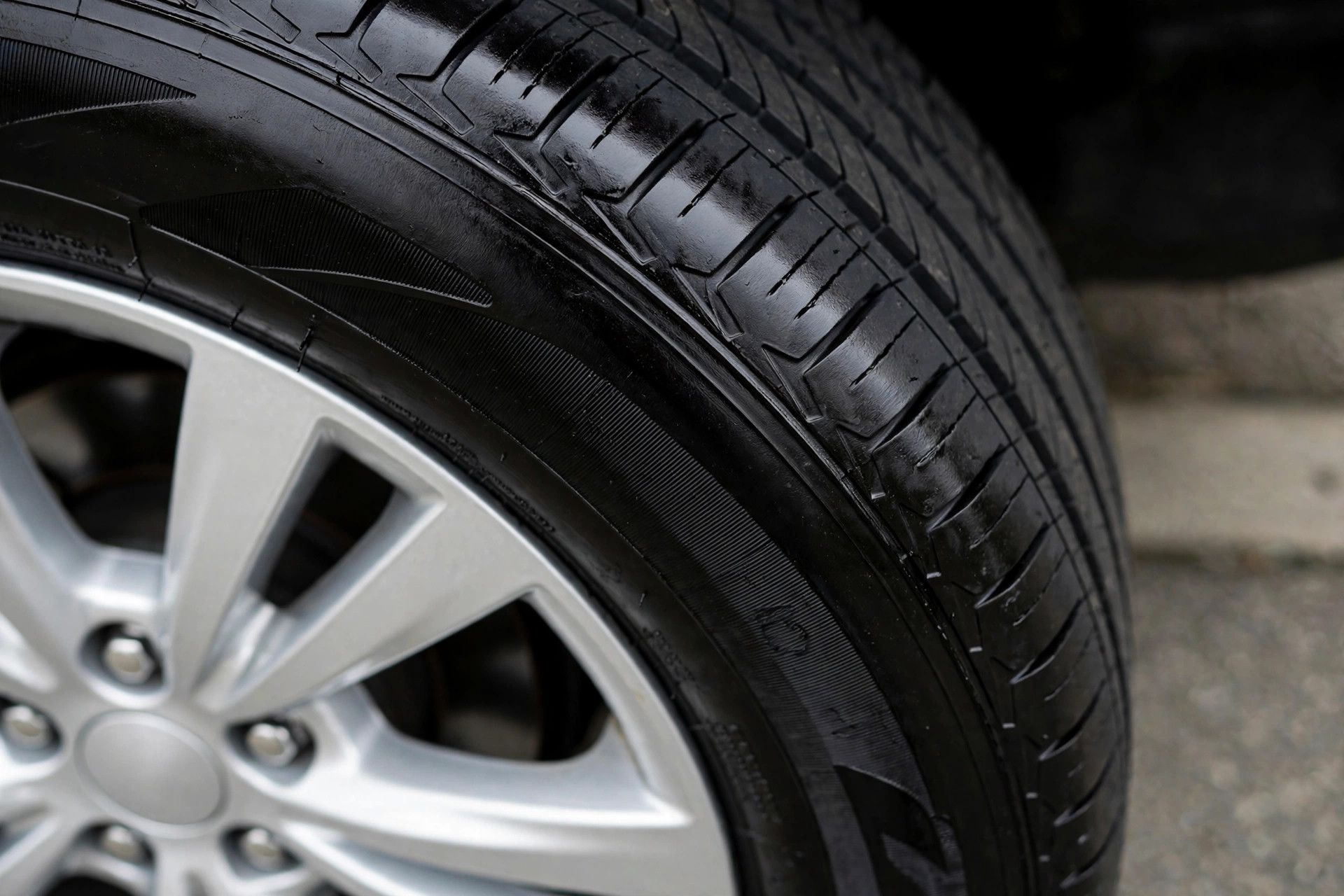
Then dress with a water-based tire dressing. It bonds to clean rubber, gives that deep satin black, and doesn’t trap oxidation underneath. No sling, no greasy shine — just clean black rubber.
It’s Maintenance, Not a One-Time Fix
Honest expectation: blooming never permanently stops. The tire keeps protecting itself, so the brown will slowly return. But with the right cleaning and dressing routine, it stays black for weeks instead of days — and each proper cleaning resets it fully.
What About White Letters and Whitewalls?
Same chemistry, more visible problem. White lettering and whitewalls show blooming and road film faster than black sidewalls. They need the same treatment — dedicated cleaner, stiff brush — just more often. And never use bleach on them despite what the internet says; it degrades the rubber.
Tire Shine Sling
Ever dressed your tires and found little black dots flung up the side of the car? That’s sling — excess silicone dressing thrown off at speed. Water-based dressings applied thin and given time to dry barely sling at all. Another reason to skip the greasy stuff: thin coats, let it dry, no dots on your quarter panels.
When Brown Means Replace, Not Clean
One safety note: blooming is cosmetic, but dry rot isn’t. If your sidewalls have fine cracking — little spiderweb lines in the rubber, especially near the tread edge — that’s aging rubber, not blooming, and no cleaner or dressing fixes it. Cracked tires are a blowout risk. When in doubt, have them inspected; we’d rather tell you to see a tire shop than dress a tire that shouldn’t be on the road.
The Bottom Line
Brown tires aren’t dirty tires — they’re chemistry. Clean them right, dress them with water-based product, and stop fighting the cycle with harsh chemicals that make it worse.
Message us today — every full detail includes properly cleaned and dressed tires, done the right way.
Vinnie's Auto Detailing and Ceramic Coating — Brookville, PA. ⭐100% Five Star Reviews⭐ | ☎️ 724-689-5482