Somebody spills coffee on the passenger seat, grabs a towel, scrubs hard — and now there’s a bigger, lighter-colored stain with a ring around it. Sound familiar? That’s because stain removal isn’t about elbow grease. It’s chemistry. And most people are doing the chemistry wrong.
Stains Are Chemistry, Not Just Dirt
Different stains need completely different chemistry:
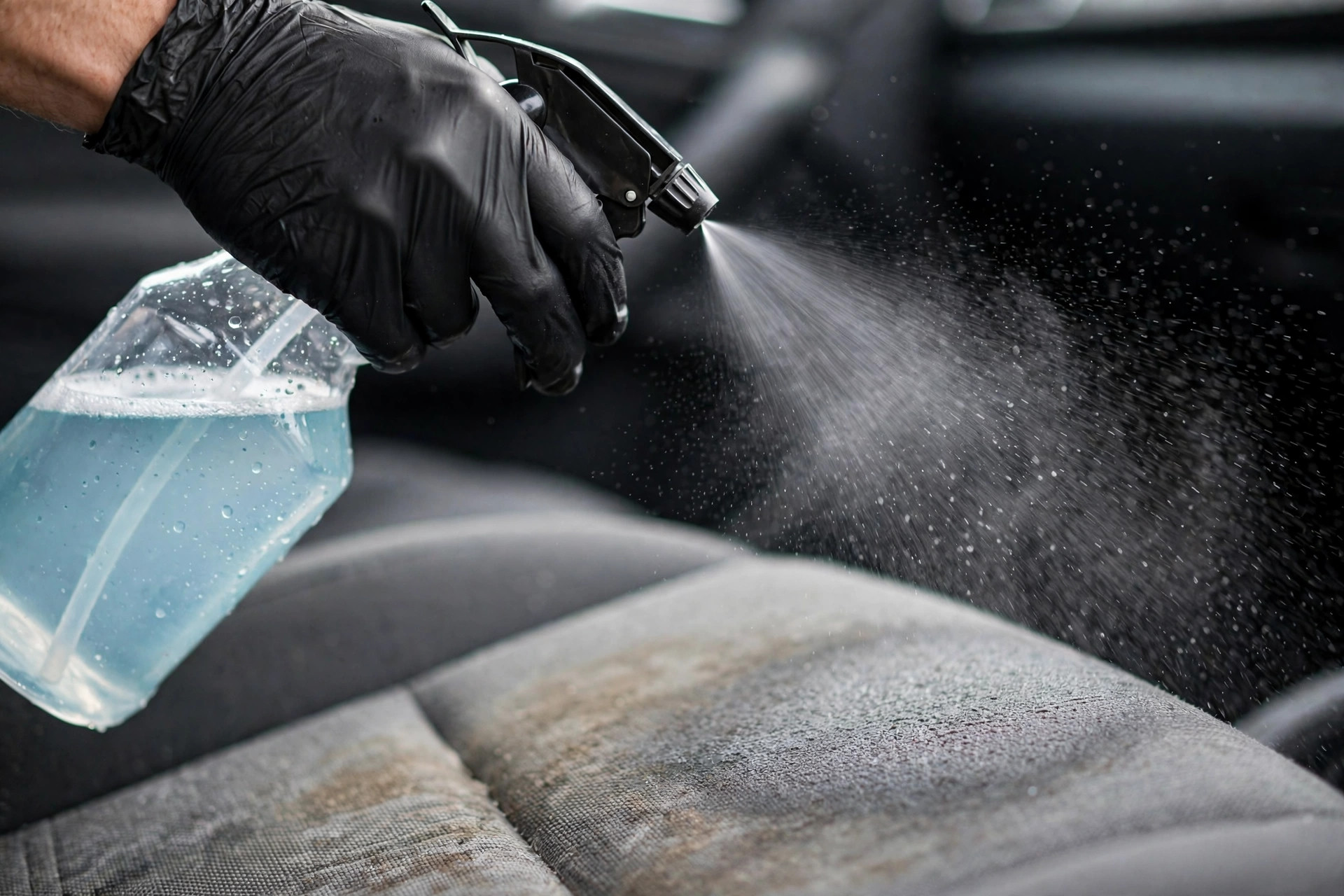
- Tannin stains (coffee, tea, wine, soda) — need an acidic tannin remover. Alkaline cleaners can set them permanently.
- Protein stains (milk, blood, food, vomit) — need enzyme cleaners that break down proteins. And never hot water first — heat cooks protein into the fiber like an egg on a skillet.
- Oil and grease stains — need a degreaser or solvent-based spotter that can dissolve petroleum. Water-based cleaners just bead up and slide off.
- Dye stains (ink, denim transfer) — need specialty dye removers, and fast action before the dye bonds.
Grab the wrong bottle and you don’t just fail to remove the stain — you can set it permanently. That’s not a scare tactic; it’s what happens when the wrong pH meets the wrong stain.
Heat Is the Enemy
This one’s worth its own section because it ruins more interiors than anything else: heat sets protein stains permanently. Hot water on a milk spill, a steam cleaner on a blood spot, or just a summer sun baking a food stain for a week — once protein coagulates in the fiber, it’s part of the fiber. Always start with cool water on unknown stains.
Why Scrubbing Makes It Worse
Scrubbing does three bad things at once: it spreads the stain outward into clean fabric, it pushes contamination deeper into the foam backing, and it damages the fibers — leaving a fuzzy, lighter patch that’s visible even after the color is gone. Blot, don’t scrub. Always.
The Pro Process
Here’s how we actually do it:
- Identify the stain type — this decides everything.
- Pre-treat with the correct chemistry and give it dwell time to work.
- Agitate gently with a soft brush — never a hard scrub.
- Hot-water extract to pull the broken-down contamination out of the fibers.
- Repeat if needed — some stains take two or three passes. Patience beats aggression.
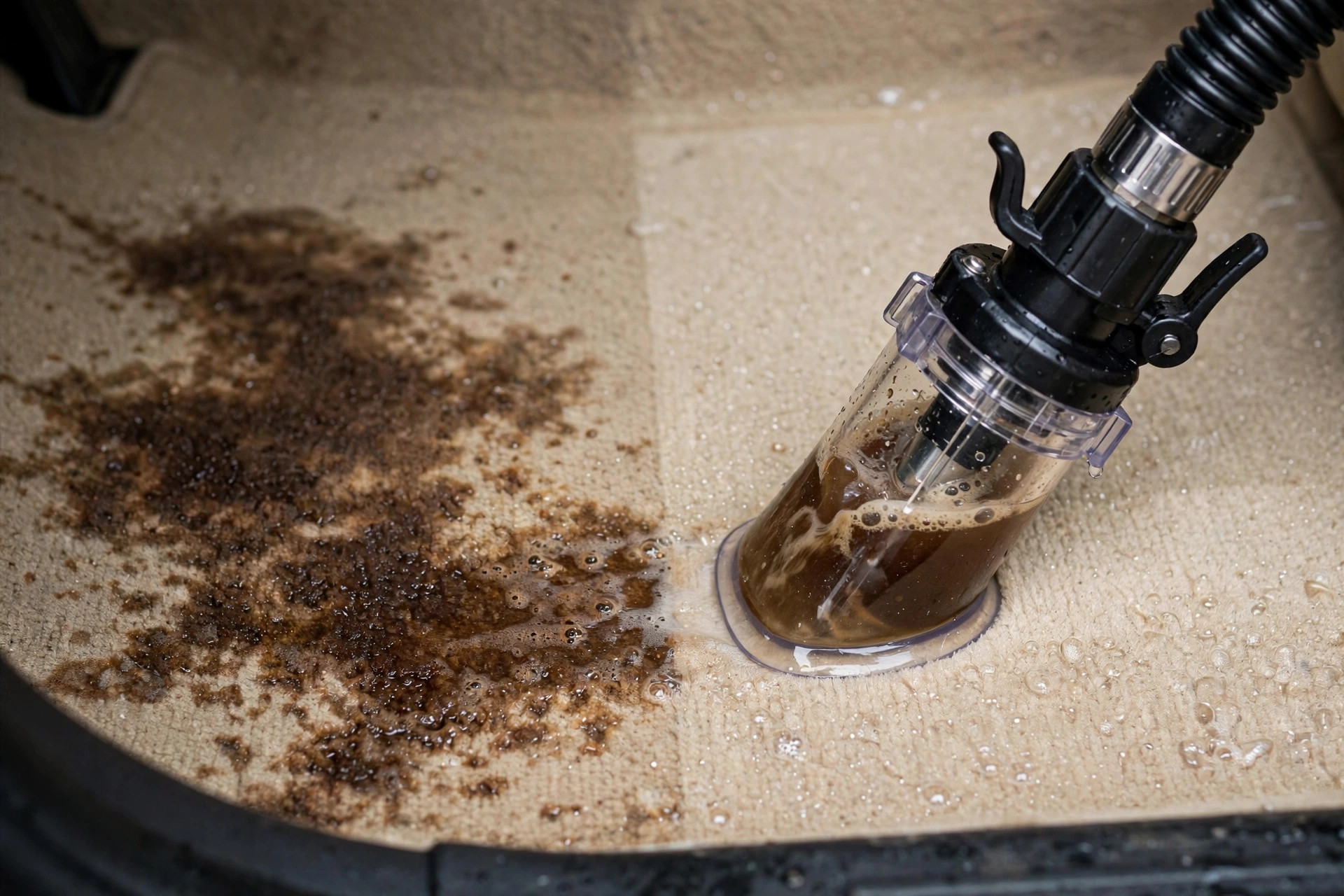
And the honest part: some stains are permanent. Bleach spots, dye that’s bonded for years, burns — we’ll tell you straight up when a stain isn’t coming out, instead of charging you to try.
The Wicking Problem
Ever had a stain disappear when wet and come back after drying? That’s wicking — contamination deep in the foam backing migrates back up the fibers as moisture evaporates. It’s why one-pass cleaning often fails on old stains.
The fix is extraction with enough vacuum power to pull from the backing, not just the surface — plus a second pass after the first one dries. Rental machines almost never have the suction for this, which is why DIY stain jobs “come back” a week later.
The Stains We See Most
Coffee on the driver seat bolster. Kids’ juice boxes in the third row. Grease on the passenger seat from fast food bags. Ink from a pen in a back pocket. Denim dye transfer on light leather — the blue tint on beige seats that everyone assumes is permanent (it usually isn’t, with the right dye remover and patience).
The Bottom Line
Stain removal is matching the right chemistry to the right stain, then extracting — not scrubbing harder. Get the chemistry wrong and you set it forever.
Message us today with a photo of the stain and we’ll tell you honestly whether it’ll come out and what it’ll take.
Vinnie's Auto Detailing and Ceramic Coating — Brookville, PA. ⭐100% Five Star Reviews⭐ | ☎️ 724-689-5482