Walk into any detailing shop and you’ll see two machines that look like they do the same job — the extractor and the steamer. They don’t. They do two completely different jobs, and knowing which one your interior needs is the difference between “looks clean” and actually clean.
Here’s how we decide which one to reach for.
Extraction Shampooing: Pulling Dirt Out of Fabric
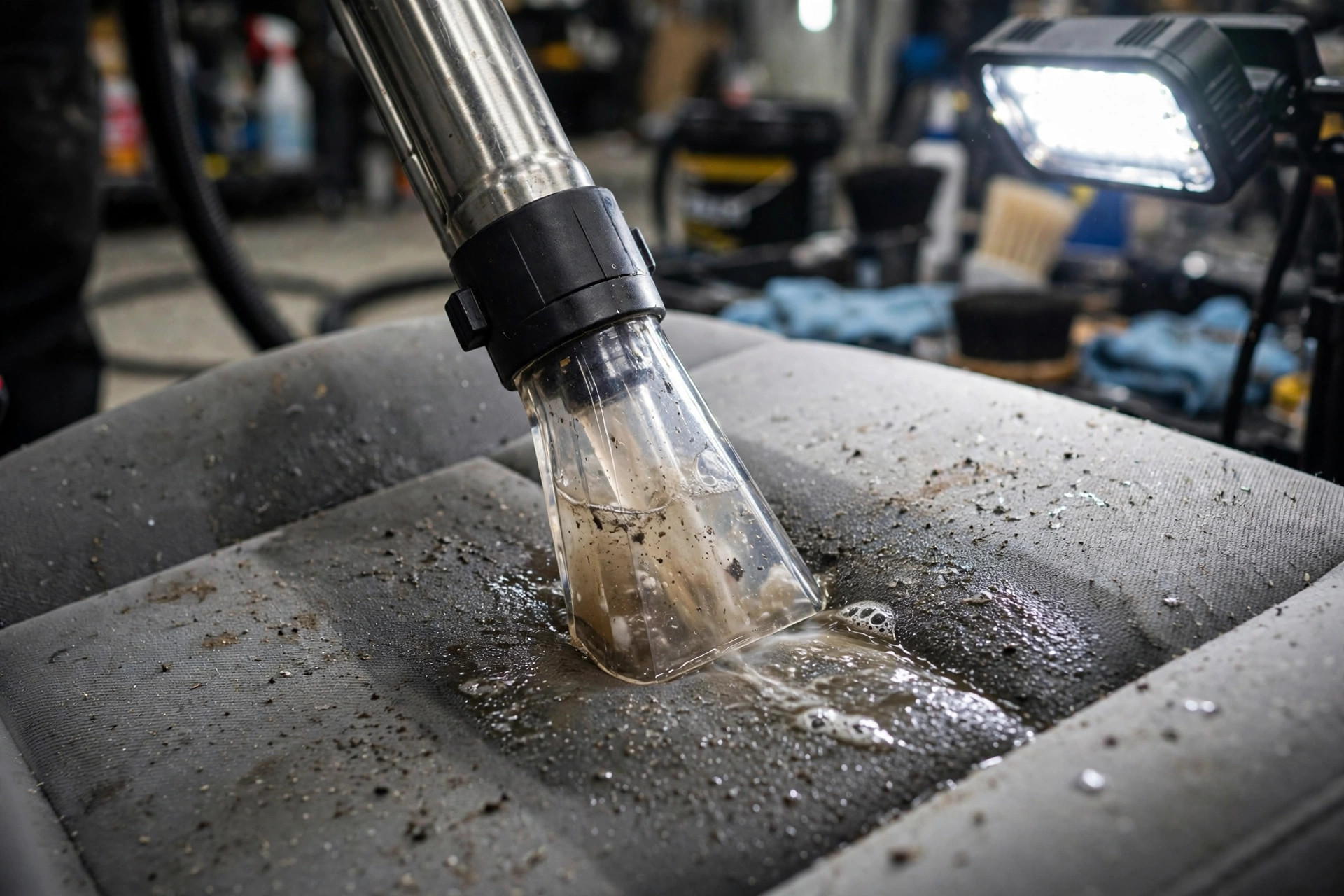
An extractor does two things at once: it sprays hot water mixed with cleaning solution deep into the fabric, and in the same pass, a powerful vacuum sucks it all back out — along with the dirt, stains, and grime that were living in there.
This is the tool for anything embedded in fabric: ground-in dirt in carpets, coffee in the seat, mystery stains in the floor mats, years of daily-driver buildup. If the soil is in the fibers, extraction is the only thing that gets it out.
Steam Cleaning: Sanitizing and Detail Work
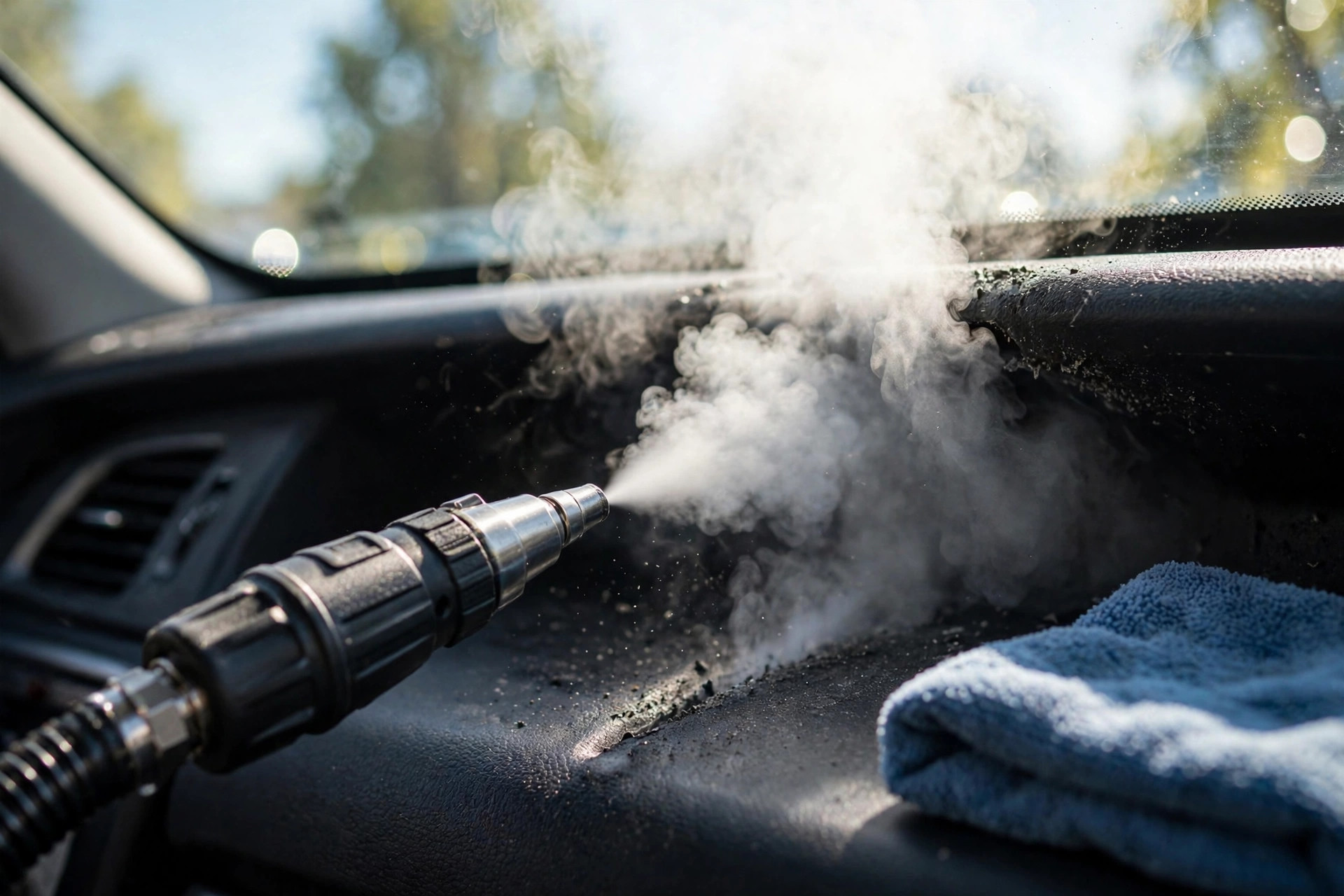
Steam is a different animal. A commercial steamer puts out vapor at 200+ degrees — no chemicals, just heat. That heat sanitizes on contact, melts away grime, and loosens buildup in places no scrub brush can reach.
Steam is the winner for: leather (lifts body oils out of the grain without soaking it), headliners (too delicate to soak), vents, crevices, seams, and cup holders, and sanitizing — it kills bacteria and odor sources on contact.
When Each One Wins
- Stained or filthy fabric seats and carpets? Extraction. Steam can’t pull embedded soil out of fibers.
- Leather seats? Steam. It lifts oils from the grain; soaking leather with an extractor is asking for trouble.
- Headliner with spots? Steam, lightly. An extractor will soak the adhesive and sag the headliner.
- Vents, seams, and tight crevices? Steam every time.
- Sanitizing after illness or a spill? Steam kills what shampooing can’t reach.
The honest answer for most interiors: both, in sequence. We extract the fabric to pull the soil out, then steam the surfaces, crevices, and leather to sanitize and finish. That’s what a real full detail interior looks like — not one machine doing a half job.
What DIY Gets Wrong
Rental extractors from the big-box store are the #1 way we see interiors get worse. They don’t have the vacuum power of a professional machine, so they leave soap and water sitting in the foam — and a damp seat in a closed car grows mildew. You’ll trade a stain for a smell.
And steam without extraction just moves dirt around. It’ll look better for a day, then the grime resettles right back into the fabric.
How Often Should Interiors Get This Treatment?
For a daily driver: a full interior detail with extraction once or twice a year keeps fabric from getting to the point of no return. In between, vacuum regularly and wipe surfaces — maintenance is cheap, restoration is expensive. Pet owners and parents of small kids should lean toward twice a year; pet hair weaves itself into fabric and dander becomes an odor source if it sits.
One more thing people don’t think about: your cabin air filter. If your car smells musty every time the AC kicks on, the filter might be the source. We check it on every interior detail — a $20 filter can solve a “mystery smell” that no amount of cleaning will fix.
The Bottom Line
Extraction pulls embedded dirt out of fabric. Steam sanitizes and details surfaces, leather, and crevices. A proper interior detail uses both — in the right order, with the right technique.
Message us today and we’ll tell you honestly what your interior needs — no upsell, just the right process for the job.
Vinnie's Auto Detailing and Ceramic Coating — Brookville, PA. ⭐100% Five Star Reviews⭐ | ☎️ 724-689-5482