“Should I get PPF or ceramic coating?” We hear it constantly — and most of the industry answers it badly, because shops that only sell one will tell you the other is useless. Here’s the straight answer: they do completely different jobs. It’s not either/or.
What PPF Actually Is
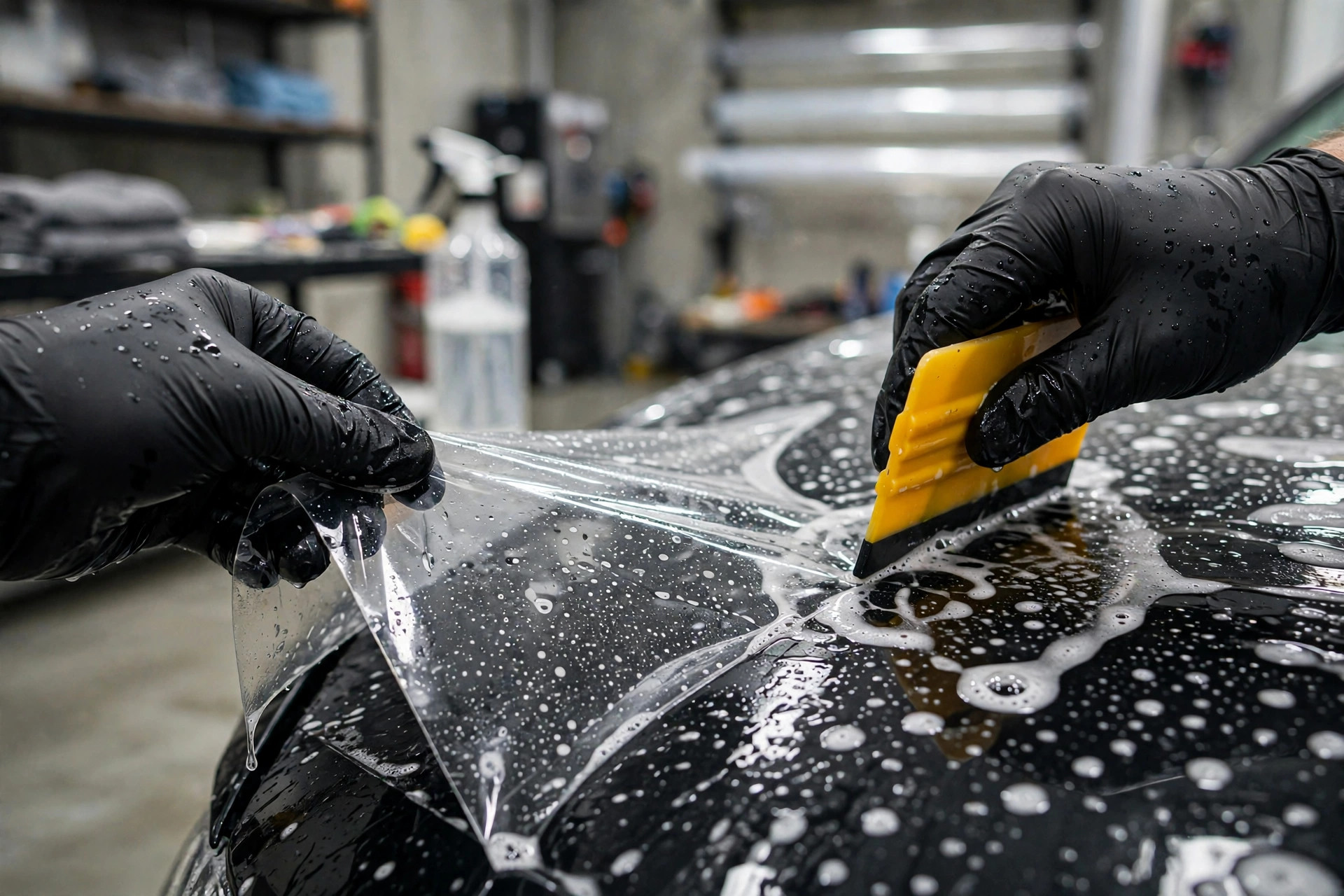
Paint protection film is a physical urethane film — thick, clear, and applied directly to the paint. It’s armor. Rocks, road debris, sandblasting on the highway, shopping cart bumps, key scratches — PPF absorbs impacts that would chip or scratch clear coat. Modern films even self-heal: light swirls disappear with heat from the sun.
Key point: PPF is the only product that stops rock chips. Nothing in a bottle does that.
What Ceramic Coating Actually Is
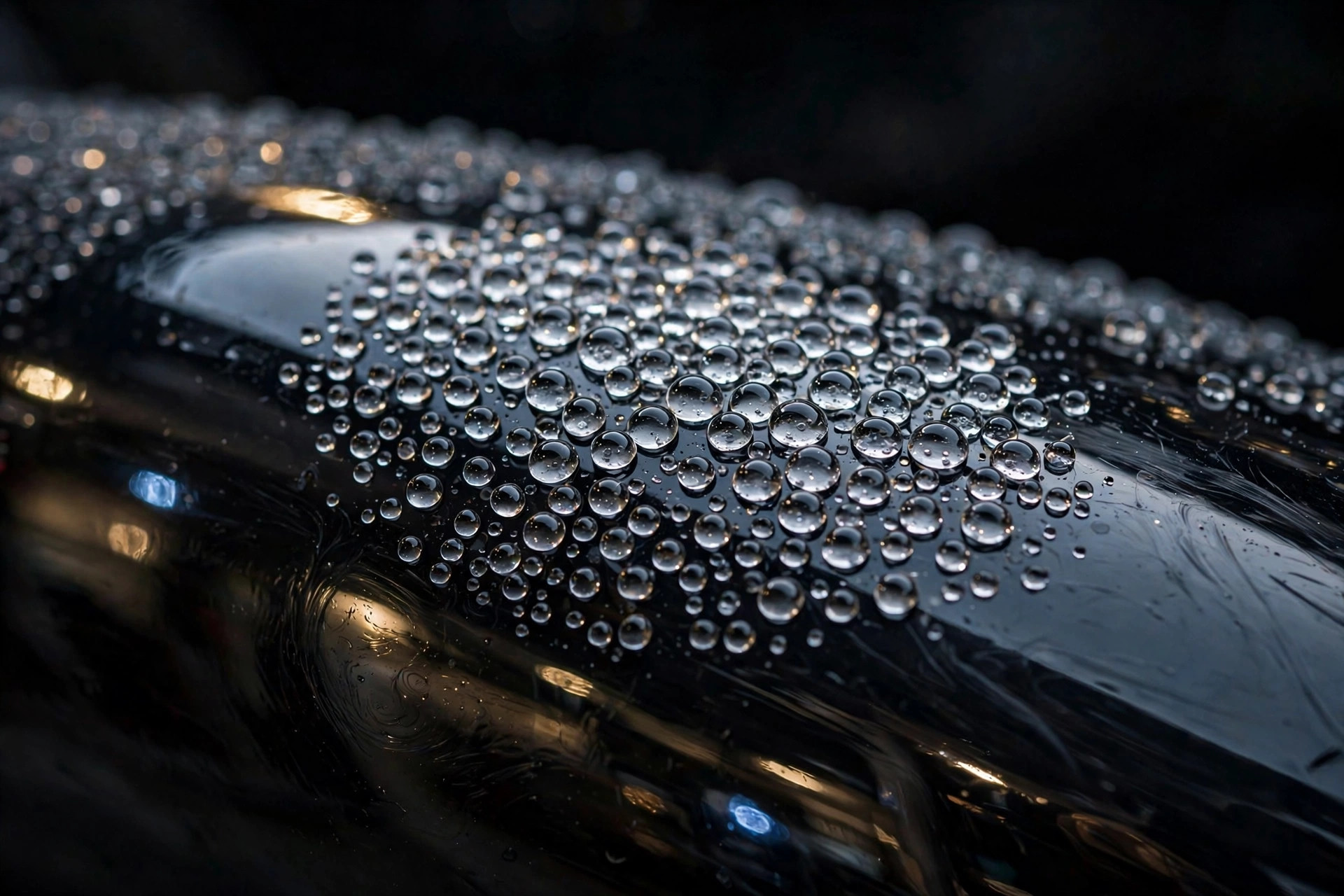
Ceramic coating is a liquid nano-coating that bonds to the clear coat. It adds extreme gloss, chemical resistance (bird droppings, bug guts, road salt), UV protection, and hydrophobics — water beads and sheets off, washing gets dramatically easier.
Key point: coating does not stop rock chips. It’s chemistry, not armor. Anyone telling you a coating protects against impacts is selling you something.
They Stack
Here’s what most people don’t know: the best setup is both. PPF goes on the impact zones — at minimum the full front (hood, bumper, fenders, mirrors) — and then ceramic coating goes over everything, including the film. The film stops the chips; the coating adds the gloss, the chemical resistance, and the easy washing across the whole car. They don’t compete — they cover each other’s weaknesses.
Which Fits Whom
- New car, highway commuter, or you keep cars 5+ years? PPF on the front + coating everywhere. Maximum protection, and it’s cheaper than one bumper respray.
- Garage-kept weekend car? Coating alone is usually plenty — you’re not taking highway rock strikes.
- Leased or budget-conscious? Coating gives you the biggest visible difference per dollar: gloss, easier washing, and protection against the chemical stuff.
Where to Put PPF If Not Everywhere
Full-car PPF is the dream and the price tag to match. The smart middle ground most people choose: full front clip (hood, bumper, fenders, mirrors, headlights), plus rocker panels behind the wheels and door handle cups. That’s where 90% of the damage happens. The rest of the car gets coating for gloss and chemical protection.
Does PPF Change How the Car Looks?
Modern film is optically clear — on most colors you can’t tell it’s there unless you’re looking for the edge lines. It adds a slight texture up close that most people never notice. What you will notice: no more rock chips on the bumper, and the front of the car still looking new in year five.
Does PPF Need Maintenance Too?
Yes — film isn’t maintenance-free. Wash it like paint (two-bucket, pH-neutral soap), don’t blast the edges with a pressure washer at point-blank range, and avoid harsh solvents. Contamination can still bond to film, which is exactly why coating over PPF is so popular: the coating makes the film as easy to wash as the rest of the car.
The Bottom Line
PPF stops impacts. Coating adds gloss, chemical resistance, and easy maintenance. They do different jobs, and together they’re the complete package.
Message us today and we’ll tell you honestly which one — or which combination — makes sense for how you drive.
Vinnie's Auto Detailing and Ceramic Coating — Brookville, PA. ⭐100% Five Star Reviews⭐ | ☎️ 724-689-5482