Here’s the truth about car odors: if you can still smell it, the source is still in there. Air fresheners, vent clips, and spray bombs don’t remove smells — they just argue with them. And the smell always wins eventually.
Getting a smell out of a car is a process. Here’s ours.
Step 1: Find and Remove the Source
Every odor has a physical source, and no amount of deodorizing works until it’s gone. Spilled milk pooled under the back seat. Cigarette ash ground into the headliner and vents. A sandwich that slid under the passenger seat three months ago. Mold growing in damp carpet from a leak.
We tear the interior down to find it — seats out if we have to. This step is unglamorous and it’s the one most people skip. It’s also the one that matters most.
Step 2: Deep-Clean Everything That Absorbed It
Odor doesn’t sit on surfaces — it soaks into foam, fibers, and headliner backing. So the entire interior gets deep-cleaned: hot-water extraction on all fabric to pull the contamination out, steam on every hard surface, vent, and crevice to sanitize.
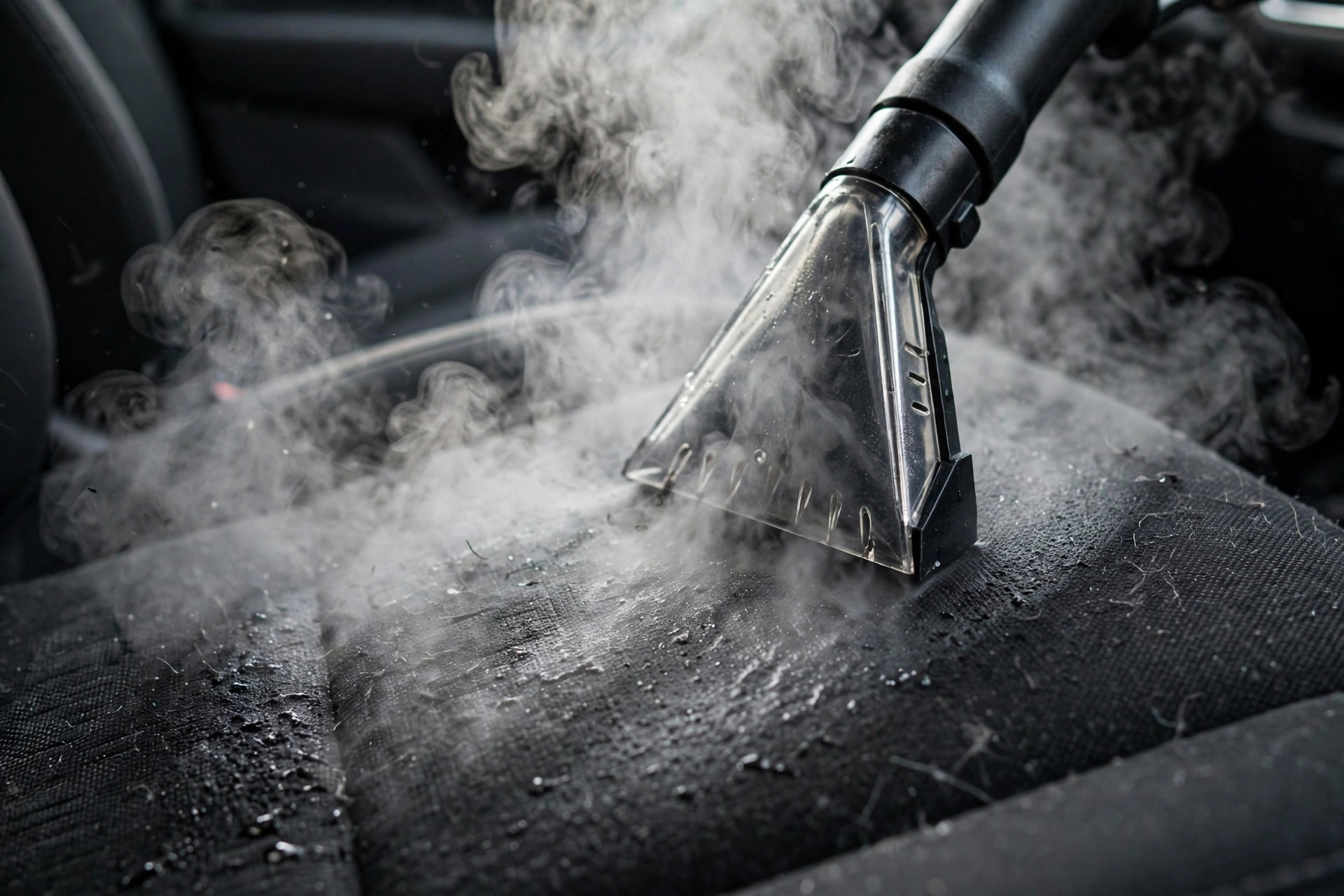
This alone handles most mild odors. But smoke, mildew, and spoiled milk are stubborn — they bond at a molecular level. That’s where step three comes in.
Step 3: Ozone Treatment
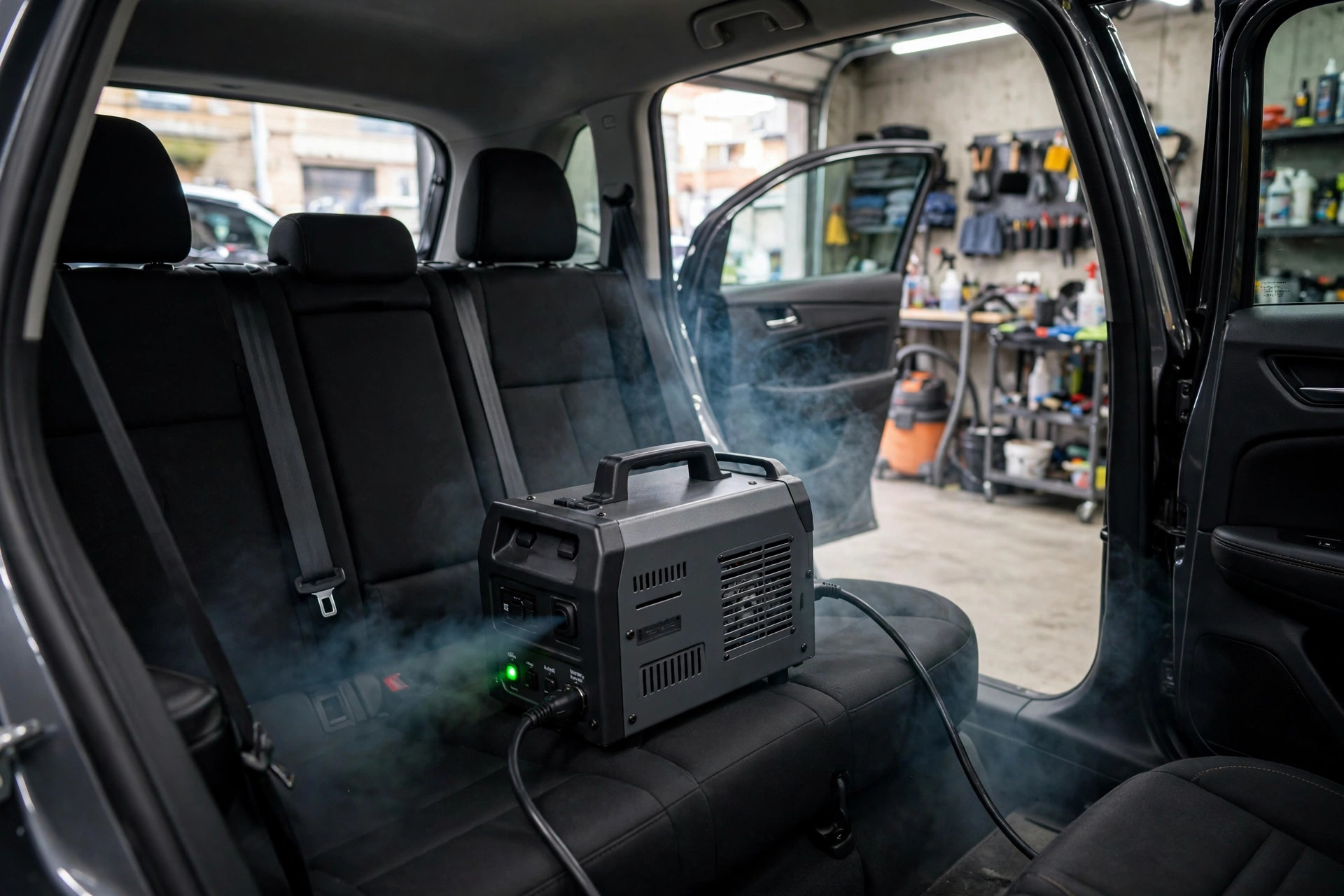
An ozone generator floods the sealed car with O₃, which oxidizes odor molecules on contact — it doesn’t cover them up, it destroys them, including the ones buried in places no cleaning tool can reach: inside the dash, behind panels, deep in the HVAC system.
We run the car sealed with the HVAC cycling so the ozone gets through the entire ventilation system — because if the smell is in the vents, it’ll come right back the first time you turn on the heat.
Enzyme Cleaners for Organic Smells
Milk, vomit, sweat, pet messes — these are protein-based, and they need enzyme cleaners. Enzymes literally digest the organic matter causing the smell. Spray-and-wipe doesn’t cut it; the enzymes need dwell time on the contamination to work. This is a big part of why DIY odor attempts fail — wrong product, no patience.
Why the Tree-Shaped Freshener Failed You
Masking agents work by overwhelming your nose with a stronger scent. The underlying odor molecules are still there, still off-gassing. The moment the freshener fades — and they all fade fast in a hot car — the original smell walks right back in. Removal beats masking every single time.
How Long Does It Take?
Honest answer: anywhere from a few hours to a full day, depending on the smell. A mild food odor might clear with a deep clean alone. Heavy smoke saturation — especially in a car smoked in for years — needs the full sequence: teardown, deep clean, enzyme treatment, and an extended ozone cycle. We’ll give you a realistic estimate up front after we assess it.
And one thing we won’t do: promise to remove a smell while its source is still active. Coolant leak making the cabin smell sweet? That needs a mechanic first — no detailer can fix a smell that’s still being created. We’ll tell you when the problem isn’t ours to solve.
The Bottom Line
Real odor removal is source removal, deep cleaning, and oxidation — in that order. Skip a step and the smell comes back. Do all three and it’s gone for good.
Message us today if your car has a smell you can’t shake. We’ll find the source and get it out — not cover it up.
Vinnie's Auto Detailing and Ceramic Coating — Brookville, PA. ⭐100% Five Star Reviews⭐ | ☎️ 724-689-5482